
Violin
1783
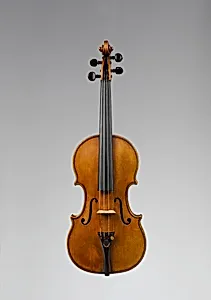
Medium
Spruce, maple, ebony
Dimensions
Total L. 33 cm (13 in.); String L. 60 cm (23-5/8 in.)
Classification
Chordophone-Lute-bowed-unfretted
Culture
Italian
Department
Musical Instruments
Museum
Metropolitan Museum of Art, New York, NY
Credit
Gift of Evelyn Stark, 1997
Accession Number
1997.147
Rights
Public Domain
Art Historical Context
Crafted in 1783 by Italian luthier Antonio Gragn of Livorno, this violin exemplifies the refined artistry of late 18th-century Tuscan instrument making. Gragnani, influenced by the Cremonese masters like Stradivari, was renowned for his elegant designs and superb tonewoods. The instrument's compact form—measuring just 33 cm in total with a 60 cm string length—s it may have served as a portable "kit" or pochette violin, favored by traveling dance masters and musicians for its convenience. Constructed from premium materials—spruce for the resonant top, maple for the back and ribs, and ebony for durable fittings—this chordophone-lute-bowed-unfretted violin showcases traditional techniques that optimized sound projection and playability. Spruce's lightness and stiffness allowed for vibrant overtones, while maple's density reflected sound beautifully, hallmarks of Italian violin craftsmanship during a golden era bridging Baroque and Classical music. A generous gift to the Metropolitan Museum of Art from Evelyn Stark in 1997, this piece invites visitors to appreciate not just visual beauty but the tactile genius of lutherie. It evokes the lively salons and concert halls of Enlightenment Europe, where such instruments brought melody to everyday life.