
Violoncello Bow
ca. 1800–1825
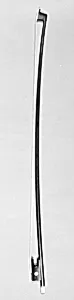
Medium
Wood, other materials
Dimensions
L. of stick 69.5 cm (27.37 in.); L. of hair 59.8 cm (23.5 in); Weight 90.4 gm.
Classification
Chordophone-Accessories-bow
Culture
British
Department
Musical Instruments
Museum
Metropolitan Museum of Art, New York, NY
Credit
Rogers Fund, 1982
Accession Number
1982.24
Rights
Public Domain
Art Historical Context
Step into the refined world of early 19th-century British music with this elegant violoncello bow from Dodd workshop, dating to around 1800–1825. Crafted primarily from wood with other materials, it features precisely balanced stick measuring 69.5 cm (27.37 in.) long, horsehair ribbon at 59.8 cm (23.5 in.), and a featherlight weight of 90.4 grams—ideal for the nuanced demands of cello performance. Acquired through the Rogers Fund in 1982, this accessory now graces the Musical Instruments department at The Metropolitan Museum of Art. The Dodd workshop exemplifies British luthier craftsmanship during a pivotal era when bow design evolved to enhance tonal control and expressiveness on chordophones like the violoncello. These bows were indispensable for drawing rich, sustained tones from gut strings, enabling virtuosos to convey profound emotion in salons and concert halls. Its classification as a chordophone accessory underscores its role not as a standalone artwork, but as a masterful tool that amplified musical artistry, reflecting the era's blend of technical innovation and aesthetic elegance.