
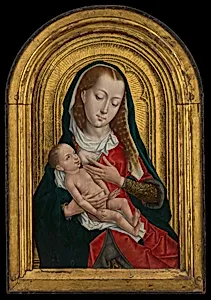
Virgin and Child
Medium
Oil on wood
Dimensions
Arched top, 22 1/8 x 13 1/2 in. (56.2 x 34.3 cm)
Classification
Paintings
Department
European Paintings
Museum
Metropolitan Museum of Art, New York, NY
Credit
Gift of J. Pierpont Morgan, 1917
Accession Number
17.190.16
Rights
Public Domain
Tags
Art Historical Context
This tender depiction of the *Virgin and Child*, created around 1480–90 by a follower of the renowned Netherlandish master Rogier van der Wey—identified with the Master of the Saint Legend Group—exemplifies the devotional art of the Northern Renaissance. Produced in the late 15th century in the Netherlands, such intimate panels were often commissioned for private prayer, evoking deep spiritual contemplation. The arched top suggests it once graced a small altarpiece or diptych, fitting neatly into a domestic chapel. Painted in oil on wood, a revolutionary medium pioneered by Early Netherlandish artists like Jan van Eyck, the work showcases meticulous glazing techniques that lend a luminous, jewel-like quality to the Virgin's robes and the Child's skin. Rogier van der Weyden's influence is evident in the graceful poses and emotional intimacy, hallmarks of his style that emphasized human tenderness amid divine themes. Here, the nursing Madonna—symbolizing maternal love and Christ's humanity—invites viewers to ponder the sacred made accessible. Housed in the Metropolitan Museum of Art since 1917 as a gift from J. Pierpont Morgan, this painting captures the era's blend of piety and technical virtuosity, reminding us of how Northern Renaissance artists transformed wood panels into windows on the divine.