
Virgin and Child
Unknown Artist
ca. 1275–1300
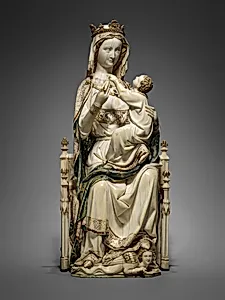
Medium
Ivory with paint
Dimensions
14 1/2 × 6 1/2 × 5 in. (36.8 × 16.5 × 12.7 cm) Other (weight): 11 lb. (5003g) Other (cavity in bottom): 11/16 × 3/4 × 1 13/16 in. (1.8 × 1.9 × 4.6 cm)
Classification
Ivories
Culture
French
Department
Medieval Art
Museum
Metropolitan Museum of Art, New York, NY
Credit
Gift of J. Pierpont Morgan, 1917
Accession Number
17.190.295
Rights
Public Domain
Tags
Art Historical Context
This exquisite *Virgin and Child*, carved from ivory around 1275–1300 in France, exemplifies the refined artistry of medieval Gothic sculpture. Likely produced in a Parisian workshop, where ivory carving flourished as a luxury craft, it depicts the tender embrace of Mary and the Christ Child—a ubiquitous devotional motif symbolizing maternal love and divine incarnation. Standing at 14½ inches tall, its substantial 11-pound weight hints at a solid block of elephant ivory, a precious material imported at great cost and prized for its creamy translucency and workability. The statue's surface once bore vibrant paint, now mostly faded, which would have enlivened the figures' drapery, flesh tones, and gilded details, enhancing their lifelike presence. A small cavity in the base (about ¾ × 1⅞ inches) suggests it may have housed relics or served as a processional object, underscoring its role in personal piety or liturgical use during the High Gothic era. French ivories like this influenced private devotion across Europe, bridging sacred art and intimate faith. Today, this gift to the Metropolitan Museum of Art from J. Pierpont Morgan in 1917 invites us to marvel at medieval craftsmanship, where every curve of Mary's veil and the Child's chubby form conveys profound spiritual warmth.