
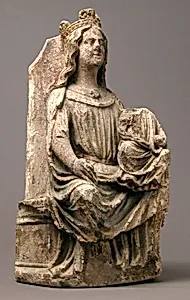
Virgin and Child
Unknown Artist
ca. 1220–30
Medium
Limestone with traces of polychromy
Dimensions
Overall: 20 1/16 x 9 1/16 x 7 5/16in. (51 x 23 x 18.5cm)
Classification
Sculpture-Stone
Culture
French or German
Department
Medieval Art
Museum
Metropolitan Museum of Art, New York, NY
Credit
Rogers Fund, 1970
Accession Number
1970.60
Rights
Public Domain
Art Historical Context
This exquisite limestone sculpture of the *Virgin and Child*, dating to around 1220–30, captures the tender devotion central to medieval Christian art. Likely from France or Germany, it exemplifies the period's shift toward Gothic naturalism, where the Virgin Mary is depicted as a loving mother cradling the infant Christ. Such icons adorned churches and cathedrals, inviting worshippers to contemplate the humanity of the divine during a time of expanding Gothic cathedrals like Chartres and Reims. Carved from limestone—a durable stone quarried in regions like the Paris basin or the Rhine Valley—the figure retains traces of original polychromy, vibrant paints that once brought Mary's graceful robes and the Child's skin to life. This coloring technique heightened emotional expressiveness, transforming stone into a lifelike vision of maternal warmth. At just over 20 inches tall, its intimate scale suggests it served as a private devotional object or processional statue. Housed in the Metropolitan Museum of Art's Medieval Art collection (Rogers Fund, 1970), this anonymous masterpiece reflects the era's artistic piety and technical skill, bridging Romanesque solidity with Gothic elegance. Visitors are drawn to its serene gaze, a timeless emblem of faith and artistry.