
Virgin of Quito
18th century
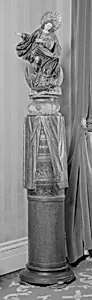
Medium
Wood, polychromed and gilded; glass eyes; silver halo
Dimensions
H. 25 in. (63.5 cm.)
Classification
Statuette
Culture
Ecuadorian
Department
The American Wing
Museum
Metropolitan Museum of Art, New York, NY
Credit
Gift of Loretta Hines Howard, 1964
Accession Number
64.164.235a, b
Rights
Public Domain
Tags
Art Historical Context
Behold the *Virgin of Quito*, a 18th-century Ecuadorian sculpture attributed to Bernardo Legarda and Miguel de. Carved from wood and meticulously polychromed and gilded, this devotional image of the Virgin Mary features striking glass eyes that lend an uncanny lifelike gaze and a radiant silver halo that catches the light. At 25 inches (63.5 cm) tall, its intimate scale invites personal contemplation, embodying the artistry of colonial Latin American religious sculpture. This reflects Quito's vibrant sculptural tradition during the Spanish colonial era, where European techniques met fervent Catholic devotion. The polychromy—layered paints and gold leaf—creates a sumptuous, almost tactile presence, drawing worshippers into spiritual intimacy. Glass eyes, a hallmark of high-end ecclesiastical art, enhance her serene expressiveness, making her not just an object but a conduit for faith. Today, gracing the Metropolitan Museum of Art's American Wing as a 1964 gift from Loretta Hines Howard, the *Virgin of Quito* showcases Ecuador's cultural legacy. It reminds us how such works bridged continents, blending craftsmanship with profound religious symbolism for communities across the Americas.
About the Artist
Bernardo Legarda|Miguel de Santiago ( | ) · 1731 |1600 –1773 |1699
active 1731–73|17th century