
Virgin of Quito
18th century
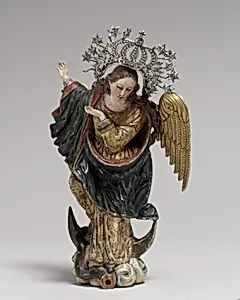
Medium
Wood, polychromed and gilded; glass eyes; silver halo
Dimensions
Height: 8 1/2 in. (21.6 cm)
Classification
Statuette
Culture
Ecuadorian
Department
The American Wing
Museum
Metropolitan Museum of Art, New York, NY
Credit
Gift of Loretta Hines Howard, 1964
Accession Number
64.164.236a, b
Rights
Public Domain
Tags
Art Historical Context
Nestled in the Metropolitan Museum of Art's American Wing, the *Virgin of Quito* is captivating 18th-century Ecuadorian sculpture to Bernardo Legarda, with possible involvement from Miguel de Santiago Carved from wood and standing just 8½ inches tall, this intimate devotional figure exemplifies colonial Latin American artistry. Its surface is richly polychromed—painted in vivid colors—and adorned with gilding, a silver halo, and lifelike glass eyes, techniques that bring the Virgin Mary to vivid, almost miraculous life for worshippers. Crafted in Quito, the heart of Ecuador's Andean colonial culture, this piece reflects the Baroque exuberance of Spanish viceregal art blended with indigenous craftsmanship. Legarda, a master sculptor active in the early 1700s, drew inspiration from the iconic limestone *Virgin of El Panecillo* atop Quito's hill, making smaller wooden versions like this one accessible for private altars and homes. Such sculptures were central to Catholic devotion, fostering personal piety amid the fervor of colonial evangelization. The artwork's intricate details—the flowing robes, serene expression, and shimmering metallic accents—highlight the era's technical virtuosity, where wood was transformed into a sacred portal. A generous gift to the Met in 1964, it invites us to appreciate how art bridged continents, carrying stories of faith across the Americas.
About the Artist
Bernardo Legarda|Miguel de Santiago ( | ) · 1731 |1600 –1773 |1699
active 1731–73|17th century