
Volynka
Unknown Artist
19th century
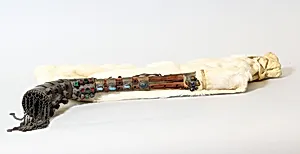
Medium
Wood, brass, horn, sheepskin, glass
Dimensions
Blowpipe 16 cm (6-5/16 in.); double chanters 26 cm (10-1/4 in.); double chanters, including single upturned horn bell and wooden yoke 27 cm (22-7/16 in.)
Classification
Aerophone-Reed Vibrated-bagpipe
Culture & Period
Georgian · 19th century
Department
Musical Instruments
Museum
Metropolitan Museum of Art, New York, NY
Credit
The Crosby Brown Collection of Musical Instruments, 1889
Accession Number
89.4.318
Rights
Public Domain
Art Historical Context
Step into the lively world of 19th-century Georgian folk with the *Volynka*, a bagpipe from the Caucasus region. Housed in the Metropolitan Museum of Art's Department of Musical Instruments as part of The Crosby Brown Collection (acquired in 1889), this aerophone exemplifies traditional craftsmanship. The "unknown artist"—likely a skilled local artisan—crafted it during a time when such instruments were central to celebrations, dances, and communal gatherings in Georgian culture, blending melody with rhythmic drone. Made from humble yet resonant materials like wood, brass, horn, sheepskin, and glass, the *Volynka* features double chanters (26 cm long) connected by a wooden yoke and an upturned horn bell, with a blowpipe measuring 16 cm. The sheepskin bag vibrates reeds to produce its distinctive, haunting sound—two simultaneous melodies over a continuous bass. This construction highlights resourceful ingenuity, using animal parts and local woods for durability and tone in rugged terrains. As a rare survivor of Georgian musical heritage, the *Volynka* offers a window into everyday artistry and oral traditions, reminding us how soundscapes shaped cultural identity long before recordings. Visitors, picture its wail echoing through mountain festivals!