
Votive cone with cuneiform inscription of Gudea
Unknown Artist
ca. 2090 BCE
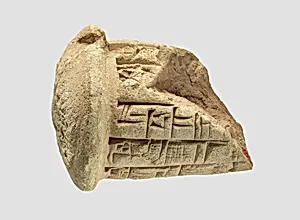
Medium
Clay
Dimensions
Length: 2 5/8 in. (6.6 cm) Diameter: 2 1/8 in. (5.4 cm)
Classification
Clay-Tablets-Inscribed
Culture & Period
Neo-Sumerian · Neo-Sumerian
Department
Ancient Near Eastern Art
Museum
Metropolitan Museum of Art, New York, NY
Credit
Purchase, 1886
Accession Number
86.11.273
Rights
Public Domain
Art Historical Context
This delicate clay votive cone, dating to around 2090 BCE, hails from the Neo-Sian period in ancient Mesopotamia, a time of renewed cultural and architectural splendor under rulers like Gudea of Lagash. Shaped like a slender cone—measuring just 2⅝ inches long and ⅛ inches in diameter—it as a sacred offering, likely placed in a temple foundation to honor the gods. The surface bears a cuneiform inscription dedicating the cone, a common practice among Mesopotamian elites to proclaim their piety and commemorate building projects, ensuring divine favor for their legacies. Crafted from fired clay, the cone exemplifies the Neo-Sumerian mastery of simple yet enduring materials. Cuneiform script, wedge-shaped impressions made with a reed stylus before firing, was the world's earliest writing system, transforming everyday clay into a vessel for history. Gudea's inscriptions often highlighted temple constructions, reflecting a ruler's role as divine intermediary. Though small, this artifact reveals the sophisticated religious worldview of Sumerian society, where even modest objects bridged the human and divine. Today, housed in the Metropolitan Museum of Art's Ancient Near Eastern Art department (purchased in 1886), it offers visitors a tangible link to one of humanity's oldest civilizations, whispering tales of devotion across millennia.