
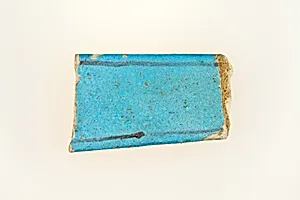
Votive Menat fragments
Unknown Artist
ca. 1479–1458 B.C.
Medium
Faience
Dimensions
H. 4.6 × W. 2.7 cm (1 13/16 × 1 1/16 in.)
Classification
Menat fragment
Period
New Kingdom
Department
Egyptian Art
Museum
Metropolitan Museum of Art, New York, NY
Credit
Rogers Fund, 1923
Accession Number
23.3.67
Rights
Public Domain
Art Historical Context
These delicate **Votive Menat fragments dating to around 1479–1458 B.C. during Egypt's New Kingdom (Dyn 18), offer a glimpse into ancient religious devotion. Crafted as small votive offerings—likely dedicated to Hathor, the goddess of music, love, and fertility—the menat was a ceremonial necklace or rattle used in temple rituals to invoke divine favor. These fragments, now housed in the Metropolitan Museum of Art's Egyptian Art (acquired via the Fund in 1923), measure just 4.6 x 2.7 cm, highlighting the exquisite miniaturization of sacred art in this golden age of pharaonic power under rulers like Hatshepsut and Thutmose III. Made of faience—a signature Egyptian medium of glazed quartz frit fired to mimic semiprecious stones like turquoise or lapis lazuli—the pieces showcase vibrant blues and greens that have endured millennia. Artisans molded and glazed the material with precision, embedding it with symbolic power; such small votives were left at shrines as personal prayers for protection or prosperity. Though fragmented, they embody the New Kingdom's artistic pinnacle: refined craftsmanship blending daily piety with monumental temple culture. Imagine pilgrims centuries ago handling these talismans, their rattle summoning Hathor's joyful presence—a testament to Egypt's enduring spiritual vibrancy.