
Votive Plaque
Unknown Artist
15th–17th century
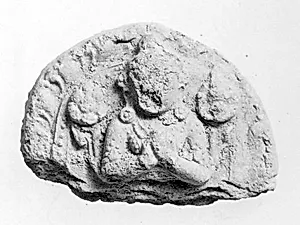
Medium
Clay
Dimensions
1 x 1 1/2 in. (2.5 x 3.81 cm)
Classification
Sculpture
Culture
Tibet (Central Asia?)
Department
Asian Art
Museum
Metropolitan Museum of Art, New York, NY
Credit
Rogers Fund, 1930
Accession Number
30.32.89
Rights
Public Domain
Art Historical Context
This delicate **Votive Plaque**, from clay in Tibet (Central Asia?) during the 15th17th centuries, exemplifies intimate devotional art of Tibetan Buddhism. Measuring just 1 x 1½ inches (2.5 x 3.81 cm), this tiny sculpture was likely created as a personal offering—known as a *tsha-tsha*—molded from clay mixed with sacred substances like ashes or blessed water. Devotees pressed these plaques into temple walls, stupas, or shrines to accumulate merit and invoke divine protection, reflecting the era's profound spiritual fervor amid the flourishing of Tibetan monastic traditions. Artistically, the plaque's modest scale and medium highlight the accessibility of religious expression for everyday practitioners, contrasting with grand temple murals or bronzes. Clay allowed for mass production via molds, enabling widespread dissemination of sacred imagery—often depicting deities, mandalas, or protective symbols—making piety portable and communal. Though the specific iconography isn't detailed here, such objects underscore Tibet's rich sculptural heritage, blending folk craftsmanship with profound cosmology. Acquired through the Rogers Fund in 1930, this piece now resides in The Metropolitan Museum of Art's Asian Art Department, inviting visitors to ponder the quiet power of small-scale devotion in a vast spiritual landscape.