
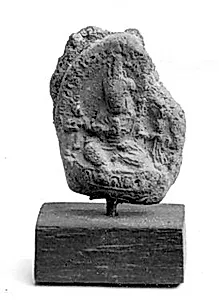
Votive Plaque
Unknown Artist
15th–17th century
Medium
Clay
Dimensions
7/8 × 13/16 in. (2.2 × 2 cm)
Classification
Sculpture
Culture
Tibet (Central Asia?)
Department
Asian Art
Museum
Metropolitan Museum of Art, New York, NY
Credit
Rogers Fund, 1930
Accession Number
30.32.94
Rights
Public Domain
Art Historical Context
This delicate **Votive Plaque**, from clay by an unknown Tibetan artist between the 15th and 17th centuries, exemplifies the intimate scale of devotional art in Central Asian spiritual traditions. Measuring just 7/8 × 13/16 inches (2.2 × 2 cm), this sculpture—now housed in the Metropolitan Museum Art's Asian Art Department—was likely designed for personal or ritual use, slipping easily into a pocket, shrine, or stupa. In Tibetan culture, votive plaques like this served as humble offerings to deities or enlightened beings, embodying the era's deep-rooted Buddhist practices. During the 15th–17th centuries, Tibet experienced a renaissance of religious art amid patronage from monastic orders, where such small clay objects proliferated as accessible aids for meditation and merit-making. Molded or impressed with sacred imagery (though details here are preserved in their modest form), they bridged the everyday devotee with the divine. The use of fired clay highlights practical artistry: durable yet earthy, allowing mass production through simple stamping techniques. Acquired through the Rogers Fund in 1930, this plaque invites us to ponder the profound spirituality packed into its miniature frame—a testament to how Tibet's artisans democratized devotion for all.