
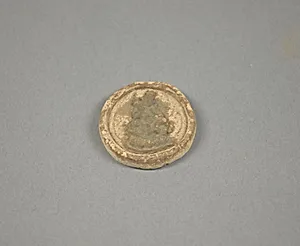
Votive Plaque with Seated Figure
Unknown Artist
ca. 1368–1643
Medium
Red clay
Dimensions
Diam. 1 9/16 in. (4.0 cm)
Classification
Sculpture
Culture
Tibet
Department
Asian Art
Museum
Metropolitan Museum of Art, New York, NY
Credit
Rogers Fund, 1930
Accession Number
30.76.154
Rights
Public Domain
Art Historical Context
Nestled in the Metropolitan Museum of Art's Asian Art collection, this delicate *Votive Plaque with Seated Figure* (ca. 1368–1643) is a poignant example of Tibetan devotional artistry. Crafted from vibrant red clay by an unknown artist, the plaque measures just 1 9/16 inches (4.0 cm) in diameter, making it a truly intimate object—perfectly suited for personal altars or portable shrines. Its classification as a sculpture highlights the skillful molding and firing techniques used in terracotta, a medium valued in Tibetan culture for its accessibility and earthy resonance. Produced during a dynamic period in Tibetan history, spanning the Phagmodrupa dynasty through early Gelugpa influence, such plaques served as humble offerings (votive) to deities or enlightened beings. The central seated figure, rendered in a meditative pose, embodies the spiritual essence of Tibetan Buddhism, inviting devotees to connect with the divine through touch and contemplation. These small-scale works underscore the democratization of sacred art, allowing everyday practitioners to carry blessings. Acquired through the Rogers Fund in 1930, this plaque offers a window into Tibet's rich sculptural tradition, where form meets faith in miniature splendor. A testament to enduring piety, it reminds us how even the tiniest artifacts can hold profound cultural weight.