
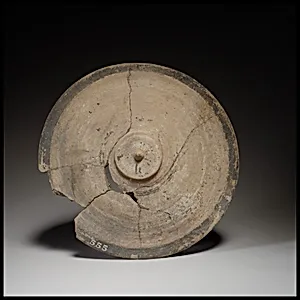
Votive shield
Unknown Artist
ca. 600–480 BCE
Medium
Terracotta
Dimensions
diameter 7 3/16 in. (18.3 cm)
Classification
Vases
Culture & Period
Cypriot · Cypro-Archaic II
Department
Greek and Roman Art
Museum
Metropolitan Museum of Art, New York, NY
Credit
The Cesnola Collection, Purchased by subscription, 1874–76
Accession Number
74.51.460
Rights
Public Domain
Art Historical Context
This delicate terracotta votive shield crafted by an unknown Cypriot artist around600–480 BCE during Cypro-Archaic period, offers a glimpse into ancient Cyprus's vibrant religious life. Measuring just 7 3/16 inches (18.3 cm) in diameter, it was likely dedicated at a sanctuary as a pious offering to deities, a common practice where small-scale replicas of shields symbolized protection, warfare, or divine favor. Classified among vases in the Metropolitan Museum of Art's Greek Roman Art Department, its shield-like form highlights the versatility of terracotta—a durable, moldable clay fired for longevity—in everyday ritual objects. Cypriot art from this era blended influences from Greece, the Near East, and Egypt, reflecting the island's strategic position as a Mediterranean crossroads. Votive items like this proliferated in Cypro-Archaic II sanctuaries, underscoring a culture rich in devotion and craftsmanship. Terracotta's earthy warmth made it ideal for mass production, allowing worshippers of varying means to participate in sacred rites. Acquired through The Cesnola Collection (purchased by subscription, 1874–76), this piece joins thousands of Cypriot treasures amassed by diplomat Luigi Palma di Cesnola, enriching our understanding of a lesser-known ancient world. Pause here to imagine it gleaming with paint long faded, a timeless token of faith.