
Vrede van Rijswijk
1697
Medium
striking (metalworking)
Dimensions
19.24; 3.8
Rights
Public Domain
About this artwork
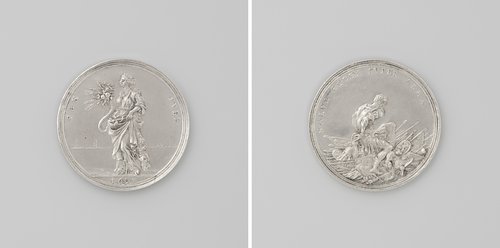
Zilveren penning. Voorzijde: Vrede met hoorn van overvloed, Mercuriusstaf en leunend op knots binnen omschrift; afsnede: jaartal. Keerzijde: Mars met handen op rug gebonden zittend op stapel Frans krijgstuig binnen omschrift
Art Historical Context
### Vrede van Rijswijk (Peace of Ryswick) Crafted in 1697 by Dutch medalist Martin Smeltzing this silver medal (penning) celebrates the Treaty of Ryswick, ended the Nine Years' between France and the Grand Alliance, including the Dutch Republic, England, and Spain. Measuring just 3.8 cm in diameter and weighing 19.24 grams, it exemplifies the art of striking—a metalworking technique where intricate designs are stamped into thin silver blanks under high pressure, allowing for fine details in small formats. These medals were popular in the late 17th century as affordable propaganda pieces, distributed to mark diplomatic triumphs and boost national morale. On the obverse, the goddess Peace (Vrede) stands triumphantly, holding a cornucopia symbolizing abundance and a caduceus (Mercury's staff) for commerce and harmony, while leaning on a club evoking strength secured by peace. The year 1697 appears below. The reverse depicts a humbled Mars, the god of war, with hands bound behind his back, seated atop a pile of French military gear—cannons and arms—highlighting the defeat of French aggression. Smeltzing's Baroque emblematic style captures the era's optimism for stability amid Europe's power struggles. As a cultural artifact, it reflects Dutch pride in resisting Louis XIV's expansionism, blending artistry with political messaging for both elites and the public.