
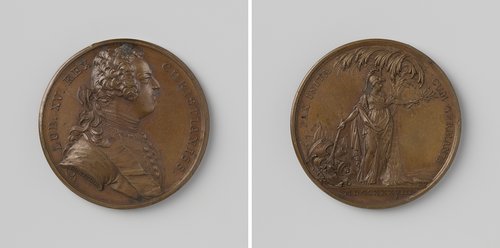
Vrede van Wenen tussen Frankrijk en de keizer
1738
Medium
striking (metalworking)
Dimensions
4.1; 25.68
Rights
Public Domain
About this artwork
Gift of J.M. van Gelder-Nijhoff
Art Historical Context
Behold the exquisite medal *Vrede van Wenen tussen Frankrijk en de keizer* (Peace of Vienna between France and the Emperor), in 1738 by the Belgian engraver Jean Duv. Struck in metal with a diameter of just .1 cm and weighing 25.68 g, this petite masterpiece exemplifies the precision of 18th-century numismatic art. Duvivier, a leading medalist of his era, was celebrated for his intricate designs that blended Baroque grandeur with emerging Rococo elegance, oftenating pivotal diplomatic moments. This medal immortalizes the Treaty of Vienna, signed on November 18, 1738, which ended the War of the Polish Succession—a conflict pitting France against the Holy Roman Empire and its allies. France, backing Stanisław Leszczyński for the Polish throne, ultimately recognized Augustus III of Saxony, securing peace through territorial adjustments like France's handover of the Duchy of Lorraine. Such medals served as portable propaganda, celebrating resolution and royal diplomacy in an age of dynastic rivalries. Duvivier's striking technique—hammering heated metal into dies—allowed for remarkable detail in allegorical figures, inscriptions, and emblems of harmony, making this a tangible slice of Enlightenment-era history. Generously donated by J.M. van Gelder-Nijhoff, it invites us to ponder how art captured the fragile art of peace. (198 words)