
Vrouw bij waterput
Medium
nishikie, with metallic pigments and blindprinting
Dimensions
210; 180
Rights
Public Domain
About this artwork
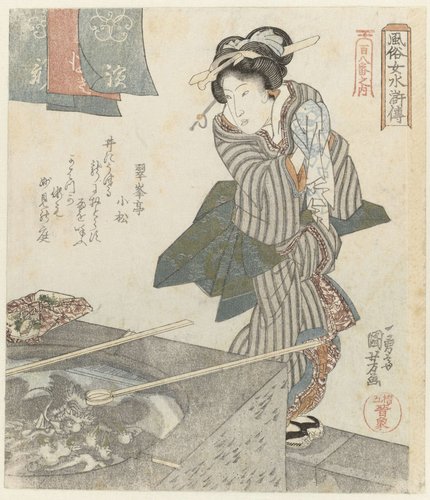
Een vrouw droogt haar gezicht met een doek nadat ze water uit een put heeft gedronken, waar ze plotseling een draak in ziet verschijnen. Met één gedicht.
Art Historical Context
### Vrouw bij Waterput (Woman at the Well) Created in 1832 by Utagawa Kuniyoshi, a of the ukiyo-e woodblock print tradition, *Vrouw bij waterput captures a fleeting moment of supernatural wonder. The intimate scene depicts a woman drying her face with a cloth after drinking from a well, only to glimpse a dragon emerging from the depths. Accompanied by a single poem—likely a witty kyōka—this print blends everyday life with the eerie realm of yokai (supernatural creatures), a hallmark of Kuniyoshi's imaginative style. His works often infused mundane settings with fantasy, delighting Edo-period viewers with tales of ghosts, heroes, and mythical beasts. Printed as a nishikie ("brocade picture"), this small-format ōban (21 x 18 cm) exemplifies luxurious ukiyo-e techniques. Metallic pigments shimmer like dragon scales, evoking otherworldly magic, while blindprinting adds subtle embossed textures for depth without color. These innovations elevated affordable prints to art treasures, making high drama accessible to urban audiences in 19th-century Japan. In the vibrant culture of Edo (modern Tokyo), such prints reflected a fascination with the transient beauty of life (*mono no aware*) and folklore. Kuniyoshi's dragon sighting hints at Shinto beliefs in sacred wells as portals to the spirit world, inviting visitors to ponder the thin veil between reality and myth. A gem of Japanese printmaking!
About the Artist
Utagawa Kuniyoshi · 1797–1861
Utagawa Kuniyoshi (1797–1861) was born in Edo to the silk-dyer Yanagiya Kichiyemon, originally bearing the childhood name Yoshisaburō. From a young age, he assisted in his family's pattern design work, which sharpened his innate mastery of color and textile motifs that would permeate his later prints. At around twelve years old, his prodigious drawing skills drew the attention of the renowned Utag...