
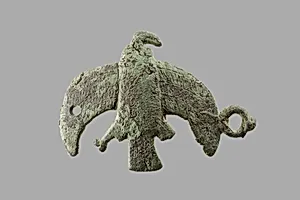
Vulture with spread wings
Unknown Artist
664–30 B.C.
Medium
Bronze or cupreous alloy
Dimensions
h. 6.7 cm (2 5/8 in.) × w. 9.1 cm (3 9/16 in.)
Classification
Attachment, vulture
Period
Late Period–Ptolemaic Period
Department
Egyptian Art
Museum
Metropolitan Museum of Art, New York, NY
Credit
Gift of Darius Ogden Mills, 1904
Accession Number
04.2.662
Rights
Public Domain
Tags
Art Historical Context
Behold the poised elegance of *Vulture with Spread Wings a diminutive yet dynamic bronze or cupreous alloy figur from ancient Egypt's Late Period to Ptolemaic era (664–30 B.C.). Measuring just 6.7 cm high and 9.1 cm wide, this unknown artist's work captures the bird in a dramatic spread-wing pose, suggesting flight or vigilant display. Crafted from a copper-based alloy, typical for durable small-scale sculptures, it exemplifies the period's advanced lost-wax casting techniques, allowing intricate details in feathers and form. In Egyptian art, birds like the vulture held profound cultural resonance, often symbolizing protection and the divine realm—evident in temple reliefs and amulets of the time. This piece, from the turbulent Late and Hellenistic-influenced Ptolemaic periods, likely served as a votive offering, jewelry element, or personal talisman, reflecting everyday piety amid political shifts under native and Greek rule. The alloy's rich patina today hints at centuries of ritual use or burial. Now gracing the Metropolitan Museum of Art's Egyptian Art department—thanks to a 1904 gift from Darius Ogden Mills—this artifact invites us to ponder the ancient Egyptians' reverence for nature's fierce guardians, bridging millennia in miniature bronze glory.