
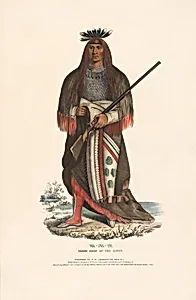
Wa-na-ta
Medium
Classification
Department
Smithsonian Collection
Museum
Smithsonian American Art Museum
Credit
National Portrait Gallery, Smithsonian Institution; gift of Betty A. and Lloyd G. Schermer
Accession Number
NPG.99.167.25
Rights
Public Domain
Tags
Art Historical Context
"Wa-na-ta," a compelling 1838 print from the Smithsonian American Art Museum captures the dignified likeness of Wanata, a male chief whose name evokes the rich traditions of Native American leadership. Created by an unidentified artist, portrait exemplifies early 19th-century printmaking techniques, likely lithography or engraving, which allowed for widespread dissemination of images documenting encounters between Euro-American explorers and Indigenous peoples. Housed in the Smithsonian Collection and gifted by Betty A. and Lloyd G. Schermer, it stands as a vital artifact in the National Portrait Gallery's holdings. Set in an exterior scene, the artwork highlights Wanata's regal attire, including feathers, jewelry, and a prominent necklace—symbols of status and cultural heritage. The inclusion of a gun underscores the era's complex exchanges, blending traditional elements with European trade goods amid expanding American frontiers. Produced during a time of U.S. military expeditions into the Great Plains, this print preserves a moment of historical intersection, offering insight into the visual representation of Native chiefs. Through its detailed rendering, "Wa-na-ta" invites visitors to reflect on the artistry of portraiture in fostering cross-cultural understanding, reminding us of the enduring stories embedded in such images. (198 words)