
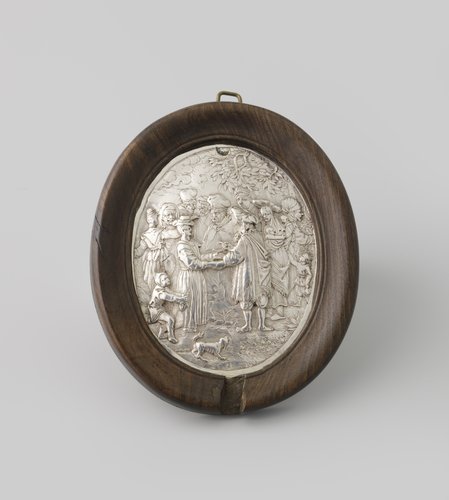
Waarzeggersscène
ca. 1650 - ca. 1700
Medium
silver (metal)
Dimensions
8.5; 7.8
Rights
Public Domain
About this artwork
hoogte 8,5 cm x breedte 7,8 cm
Art Historical Context
This delicate silver piece, titled *Waarzeggersscène* (Fortune Teller Scene), was crafted by Dutch artist Claes Baardt between roughly 1650 and 1700. Measuring just 8.5 by 7.8 centimeters, the compact work likely served as a small plaque or decorative element, showcasing the fine metalworking traditions of the Dutch Golden Age. Baardt’s choice of silver allowed for intricate detailing, capturing the lively interaction of figures in a moment of divination. During this period, the Netherlands enjoyed immense prosperity from global trade, and silversmiths like Baardt created luxury objects that blended everyday subjects with artistic refinement. Fortune-telling scenes were popular in 17th-century Dutch art, often reflecting society’s fascination with fate, mystery, and human curiosity. The medium itself—silver—symbolized wealth and status while demonstrating exceptional technical skill in chasing and engraving. Though small in scale, the artwork highlights the period’s emphasis on narrative detail and craftsmanship. Visitors can appreciate how such pieces brought storytelling into intimate domestic settings, turning functional or ornamental silver into miniature windows onto 17th-century life.