
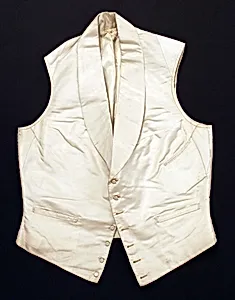
Waistcoat
Unknown Artist
19th century
Medium
silk
Classification
Waistcoat
Culture
American
Department
Costume Institute
Museum
Metropolitan Museum of Art, New York, NY
Credit
Gift of Henri Bendel II, 1955
Accession Number
C.I.X.55.1.4
Rights
Public Domain
Art Historical Context
This elegant 19th-century Americancoat, crafted from luxurious silk, offers a glimpse into the refined world of men's fashion during a transformative era in the United States. Waistcoats were a staple of the gentleman's wardrobe, forming the stylish centerpiece of the three-piece suit popularized in the early to mid-1800s. Worn beneath a frock coat or tailcoat, they signified social status and were often reserved for formal occasions, business attire, or evening events, reflecting the growing emphasis on personal presentation amid America's industrial and cultural expansion. The choice of silk as the medium underscores its historical prestige—prized for its sheen, durability, and tactile elegance, was an imported luxury fabric that highlighted the wearer's affluence. In 19th-century America, such garments European influences with emerging domestic tastes, evolving from ornate Regency styles to sleeker Victorian forms. Though the artist remains unknown, this piece exemplifies the skilled needlework and pattern-making of the Costume Institute's collection. Generously gifted to the Metropolitan Museum of Art in 1955 by Henri Bendel II, a notable figure in New York fashion retail, the waistcoat preserves a tangible link to everyday opulence. Visitors can appreciate how clothing like this narrated stories of identity, economy, and aspiration in antebellum and post-Civil War America.