
Waistcoat
Unknown Artist
1780–89
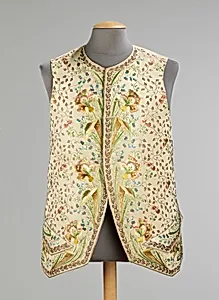
Medium
silk
Classification
Waistcoat
Culture
probably French
Department
Costume Institute
Museum
Metropolitan Museum of Art, New York, NY
Credit
Brooklyn Museum Costume Collection at The Metropolitan Museum of Art, Gift of the Brooklyn Museum, 2009; Gift of Donald Mavros, 1971
Accession Number
2009.300.2908
Rights
Public Domain
Art Historical Context
Step into the opulent world of 18th-century French fashion with this exquisite silk waistcoat from 1780–89. Crafted by an unknown artist, likely in France, it exemplifies the height of men's formal attire during the late Ancien Régime. Waistcoats were essential components of the three-piece suit—comprising coat, waistcoat, and breechesworn by the aristocracy and emerging bourgeoisie to signal wealth and refinement. This garment's silk underscores its luxury status; silk, often imported from Lyon or imported weaves, was hand-stitched and sometimes embroidered with intricate patterns reflecting the fading Rococo style's floral motifs or emerging Neoclassical restraint. As political tensions brewed toward the French Revolution, such pieces represented fleeting extravagance, adorning figures at Versailles or Parisian salons. Housed in the Met's Costume Institute from the Brooklyn Museum collection, this waistcoat offers a tactile glimpse into social history—how fabric conveyed power and taste. Its survival highlights the artistry of anonymous tailors, preserving a snapshot of pre-revolutionary elegance for modern eyes.