
Waistcoat
Unknown Artist
early 18th century
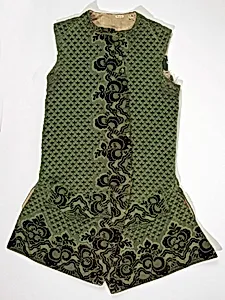
Medium
silk, wool, linen
Classification
Waistcoat
Culture
Italian
Department
Costume Institute
Museum
Metropolitan Museum of Art, New York, NY
Credit
Rogers Fund, 1940
Accession Number
40.134.12
Rights
Public Domain
Art Historical Context
This exquisite waistcoat from early 18th-century Italy exemplifies the opulent fashion of the Baroque era, when men's attire blended functionality with lavish display. Crafted from a luxurious combination of silk, wool, and linen, it reflects the period's emphasis on rich textiles sourced from Italy's renowned weaving centers like Lyon-influenced silk production and local wool trades. Worn as an essential undergarment layered beneath a coat and breeches, waistcoats like this one showcased a gentleman's status through their fine handiwork and vibrant materials. Housed in the Metropolitan Museum of Art's Costume Institute and acquired through the Rogers Fund in 1940, this piece offers a rare glimpse into Italian sartorial culture during a time of artistic flourishing under Habsburg influence. The unknown artist's skill in assembling these fabrics highlights the collaborative craftsmanship of tailors, embroiderers, and dyers, where silk provided sheen and durability, wool added warmth, and linen ensured breathability. Such garments were not mere clothing but social statements, adorning nobility at courts and operas. Today, it invites us to appreciate how everyday luxury shaped European identity, preserving the tactile elegance of a bygone age for modern visitors.