
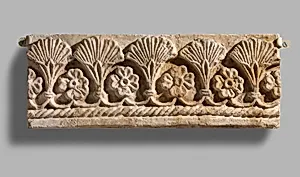
Wall decoration with vegetal design
Unknown Artist
ca. 6th century CE
Medium
Stucco
Dimensions
7 5/8 × 20 3/16 × 2 5/16 in. (19.3 × 51.3 × 5.8 cm)
Classification
Stucco-Reliefs
Culture & Period
Sasanian · Sasanian
Department
Ancient Near Eastern Art
Museum
Metropolitan Museum of Art, New York, NY
Credit
Rogers Fund, 1932
Accession Number
32.150.45
Rights
Public Domain
Tags
Art Historical Context
This exquisite stucco relief, titled *Wall Decoration with Vegetal Design*, hails from the Sasan Empire (ca. 224–651 CE), a golden age of Persian artistry in the ancient Near East. Dating to around the 6th CE, this fragment—measuring about 7½ by 20 inches—was likely part of a larger palace or temple wall, showcasing the Sasanians' mastery of architectural ornamentation. Acquired by the Metropolitan Museum of Art through the Rogers Fund in 193, it exemplifies the era's love for intricate, nature-inspired motifs, particularly floral patterns that evoke blooming gardens and eternal abundance. Sasanian stucco work, a versatile medium of molded and carved plaster, allowed artisans to create low-relief sculptures that adorned interiors with depth and shadow play. Vegetal designs like these flowering elements were not mere decoration; they symbolized paradise, fertility, and the cosmic order central to Zoroastrian beliefs, blending Persian traditions with influences from neighboring Byzantine and Roman styles. The fine detailing—probable vines, leaves, and blossoms—highlights skilled handcrafting, where wet stucco was pressed into molds or carved freehand before drying. Today, this piece invites us to imagine opulent Sasanian halls alive with light filtering through such reliefs, a testament to an empire's enduring aesthetic legacy in bridging antiquity and Islamic art traditions.