
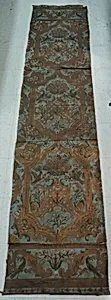
Wall hanging fragment
first quarter 18th century
Medium
Stamped, gilded and painted leather
Dimensions
9 ft. 3 3/4 in. × 24 in. (282.9 × 61 cm)
Classification
Natural Substances-Leatherwork
Culture
Dutch
Department
European Sculpture and Decorative Arts
Museum
Metropolitan Museum of Art, New York, NY
Credit
Rogers Fund, 1908
Accession Number
08.171.1c
Rights
Public Domain
Tags
Art Historical Context
This exquisite wall hanging fragment by Daniel Marot the Elder crafted in the first quarter of the 18 century, exemplifies the opulent Dutch decorative arts of the Baroque era. Measuring nearly 10 feet tall but only two feet wide, this surviving piece from a larger panel once adorned the walls of affluent interiors, transforming rooms into lavish displays of wealth and artistry. Marot, a leading Huguenot designer who bridged French and Dutch styles, was renowned for his intricate patterns that influenced palaces and grand homes across Europe. Made from stamped, gilded, and painted leather—a luxurious medium prized for its durability and sheen—this artwork showcases advanced techniques. The leather was tooled with stamps to create raised motifs of birds and flowers, then gilded for a golden luster and hand-painted with vibrant colors, mimicking costly tapestries at a fraction of the cost. Popular in the Netherlands, such "Cordoban"-style leatherwork (inspired by Spanish traditions) offered waterproof elegance, ideal for humid climates, and reflected the era's fascination with nature's abundance. Acquired by The Metropolitan Museum of Art through the Rogers Fund in 1908, this fragment invites us to imagine the grandeur of 18th-century Dutch life, where every surface told a story of refinement and prosperity. A true gem of European leatherwork, it highlights how everyday materials could achieve extraordinary beauty.