
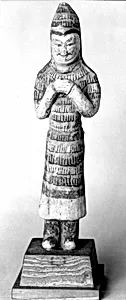
唐 彩繪泥塑武士俑|Warrior
Unknown Artist
7th century
Medium
Unfired clay with pigment
Dimensions
H. 11 1/4 in. (28.6 cm); W. 3 1/4 in. (8.3 cm)
Classification
Tomb Pottery
Culture & Period
China · Tang dynasty (618–907)
Department
Asian Art
Museum
Metropolitan Museum of Art, New York, NY
Credit
Rogers Fund, 1952
Accession Number
52.190.5
Rights
Public Domain
Tags
Art Historical Context
Step into the vibrant world of Tang dynasty China with this striking *Warrior* figurine, a 7th-century guardian crafted from unfired clay and adorned with colorful pigments. Dating to the early Tang period (618–907), a golden age of cosmopolitan culture, economic prosperity, and military might, these mingqi—or spirit objects—were buried with the elite to serve and protect them in the afterlife Standing just 11¼ inches tall, this alert soldier embodies the era's fascination with realism and grandeur, evoking the disciplined warriors of China's expansive empire. Artistically, the piece showcases masterful hand-modeling techniques, with detailed armor, weapons, and a stern expression that capture the Tang's bold aesthetic. The use of unfired clay, painted vibrantly before burial, prioritized ritual over permanence; though pigments have faded over time, traces reveal a once-lively palette of reds, blacks, and earth tones. As tomb pottery, it highlights cultural beliefs in immortality and the afterlife, where such figures formed miniature armies or retinues. Acquired through the Rogers Fund in 1952, this Metropolitan Museum of Art treasure offers a window into Tang burial customs, reminding us how art bridged the living and the eternal. Imagine thousands like him standing sentinel in a vast underground tomb!