
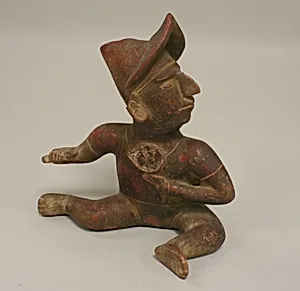
Warrior Figure
Unknown Artist
2nd century BCE–3rd century CE
Medium
Ceramic
Dimensions
H. 11 x W. 10 1/2 x D. 7 5/16 in. (27.9 x 26.7 x 18.6 cm)
Classification
Ceramics-Containers
Culture
Colima
Department
Arts of Africa, Oceania, and the Americas
Museum
Metropolitan Museum of Art, New York, NY
Credit
The Michael C. Rockefeller Memorial Collection, Bequest of Nelson A. Rockefeller, 1979
Accession Number
1979.206.481
Rights
Public Domain
Tags
Art Historical Context
This striking *Warrior Figure* from theima culture of West Mexico (2nd century BCE–3 century CE) exemplifies the region's vibrant Pre-Columbian ceramic tradition. Crafted from clay, this hollow vessel stands about 11 inches tall, with a robust form measuring 10½ inches wide and 7⅜ inches deep. Classified as a ceramic container, it likely served both practical and ritual purposes, its modeled surface depicting a male warrior in dynamic pose—complete with weapons, attire, and expressive features typical of Colima shaft tomb artistry. Colima potters, working during the Late Formative to Early Classic periods, created these figures as grave goods for deep shaft tombs, reflecting beliefs in the afterlife and social hierarchies. Warriors like this one symbolized strength, protection, and elite status, often buried with the deceased to ensure their journey to the next world. Techniques involved hand-building coils of clay, detailed modeling, and burnishing with slips before open-pit firing, yielding the warm earthy tones and subtle textures we see today. Housed in The Metropolitan Museum of Art's Michael C. Rockefeller Memorial Collection, this piece offers a window into Colima's sophisticated worldview, where art bridged the earthly and spiritual realms. Its compact yet powerful presence invites visitors to ponder the valor of ancient Mesoamerican societies.