
Watch
1765–66
Medium
Silver
Dimensions
Diameter: 1 7/8 in. (4.8 cm)
Classification
Horology
Culture
British, London
Department
European Sculpture and Decorative Arts
Museum
Metropolitan Museum of Art, New York, NY
Credit
Bequest of George White Thorne, 1883
Accession Number
83.1.77a, b
Rights
Public Domain
Tags
Art Historical Context
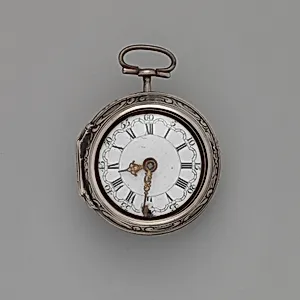
Crafted by the esteemed London watchmaker John Work between 1765 and 1766, *Watch* is a exquisite example of 18th-century British horology, housed in the Metropolitan Museum of's Department of European Sculpture and Decor Arts. This petite silver timepiece, with a diameter just 1 7/8 inches (4.8 cm), exemplifies miniaturization and precision engineering that defined Georgian-era luxury goods. Bequeathed to the Met in 1883 by White Thorne, it reflects the era's fascination with finely wrought personal accessories that blended functionality with artistry. In mid-18th-century London, watchmaking flourished as a pinnacle of decorative arts, rivaling jewelry in opulence. Silver, a favored medium for its luster and workability, allowed makers like Worke to showcase intricate chasing and engraving techniques. The watch's motifs—featuring horses and human figures—likely adorn its case or dial, evoking equestrian themes popular among Britain's aristocracy, who prized such pieces as symbols of status and refined taste. This horological gem not only tracks time but captures a moment in craftsmanship history, when London dominated European watch production. Visitors will appreciate its delicate scale, inviting a closer look at the interplay of utility and ornament in everyday elegance.