
Watch
ca. 1720–30
Medium
Gold, enamel
Dimensions
Diameter: 2 in. (5.1 cm)
Classification
Horology
Culture
British, London
Department
European Sculpture and Decorative Arts
Museum
Metropolitan Museum of Art, New York, NY
Credit
Gift of J. Pierpont Morgan, 1917
Accession Number
17.190.1465a, b
Rights
Public Domain
Art Historical Context
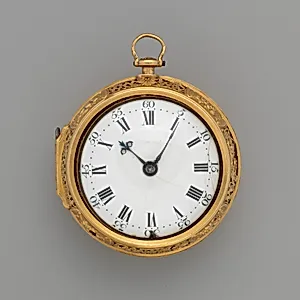
Step into the elegant world of 18th-century British horology with *Watch* by William Webster, crafted around 1720–30 in London. This petite timepiece, just 2 inches (5.1 cm) in diameter, exemplifies the exquisite craftsmanship of the Georgian era, when pocket watches were coveted accessories for the aristocracy. Housed in shimmering gold with delicate enamel decoration, it blends functionality with opulent artistry, reflecting the period's fascination with precision mechanics and lavish personal adornments. The medium of gold and enamel is particularly noteworthy. Gold provided durability and prestige, while enamel—a glassy substance painted onto the metal and fired at high temperatures—allowed for vibrant, durable designs that mimicked fine porcelain or jewels. Webster, a skilled London watchmaker, mastered these techniques amid a booming trade in luxury horology, where London rivaled Geneva as a center for innovation. Such watches often featured intricate cases that doubled as jewelry, showcasing the fusion of science and decorative arts. Today, this gem resides in the Metropolitan Museum of Art's European Sculpture and Decorative Arts Department, a generous 1917 gift from J. Pierpont Morgan. It invites us to ponder how timekeeping evolved from utilitarian tools to symbols of status, capturing a slice of Enlightenment-era refinement.