
Watch
ca. 1650
Medium
Rock crystal, silver, enamel
Dimensions
Overall: 2 × 1 1/2 in. (5.1 × 3.8 cm)
Classification
Horology
Culture
French, Paris
Department
European Sculpture and Decorative Arts
Museum
Metropolitan Museum of Art, New York, NY
Credit
Gift of J. Pierpont Morgan, 1917
Accession Number
17.190.1621
Rights
Public Domain
Tags
Art Historical Context
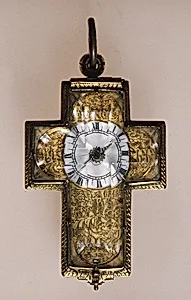
This exquisite "Watch" by Parisian watchmaker Pierre-Martin Sche, dating to around 1650, exemplifies pinnacle of French horology during the early Baroque era. Crafted from translucent rock crystal, silver, and enamel, the diminutive timepiece—measuring just 2 × 1 1/2 inches—takes the form of a cross blending functional innovation with devotional symbolism. Rock crystal, a prized material for its clarity, allowed viewers to glimpse the intricate inner mechanisms, while enamel provided vibrant, durable decoration, techniques honed by Paris's master craftsmen amid Louis XIV's rising courtly splendor. In 17th-century Europe, watches evolved from rare novelties to coveted status symbols among the elite, and Scheult's creation reflects this shift. The cross shape underscores its cultural role, likely worn as a pendant by the pious aristocracy, merging timekeeping with Christian iconography. Such horological marvels from Paris workshops advanced precision while showcasing opulent design, influencing decorative arts across the continent. A gift to the Metropolitan Museum of Art from J. Pierpont Morgan in 1917, this piece now resides in the European Sculpture and Decorative Arts department, inviting visitors to ponder how 350-year-old ingenuity still captivates today.