
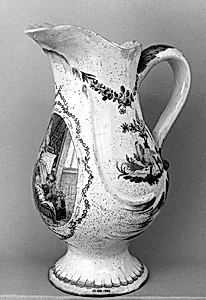
Water jug
Unknown Artist
1753–95
Medium
Faience (tin-glazed earthenware)
Dimensions
Height: 8 3/4 in. (22.2 cm)
Classification
Ceramics-Pottery
Culture
French, Sceaux
Department
European Sculpture and Decorative Arts
Museum
Metropolitan Museum of Art, New York, NY
Credit
Gift of J. Pierpont Morgan, 1917
Accession Number
17.190.1905
Rights
Public Domain
Tags
Art Historical Context
This delightful water jug, crafted in Sceaux, France, between 1753 and 1795, exemplifies the elegance of 18th-century European fai—tin-glazed earthenware for its vibrant durability. Standing at 8 3/4 inches (22.2 cm) tall, it belongs to the Metropolitan Museum of Art's European Sculpture and Decorative Arts, generously gifted by J. Pier Morgan in 1917. Produced in Sceaux, a key center for French ceramics, such jugs blended functionality with artistry, serving households while showcasing the era's love for ornate domestic wares. The medium's tin glaze created a smooth, white surface ideal for bold polychrome decoration, as seen in the jug's motifs of birds and flowers—timeless symbols of nature's beauty and abundance. These designs reflect the Rococo influence prevalent in mid-to-late 18th-century France, where playful, colorful patterns adorned everyday objects, elevating them to status symbols amid the opulence of the Ancien Régime. Today, this anonymous masterpiece highlights Sceaux faience's technical prowess and cultural role, bridging utility and aesthetics in pre-Revolutionary France. A testament to forgotten artisans, it invites us to appreciate the lively details that once brightened tabletops.