
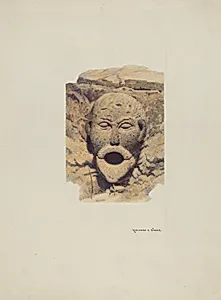
Water Spout
1939
Medium
watercolor, colored pencil, and graphite on paper
Dimensions
overall: 35.5 x 26.1 cm (14 x 10 1/4 in.) Original IAD Object: none given
Classification
Index of American Design
Department
CG-W
Museum
National Gallery of Art, Washington, D.C.
Credit
Index of American Design
Accession Number
1943.8.6899
Rights
Public Domain
Art Historical Context
"Water Spout" is a captivating rendering by Raymond E. Noble, created in 1939 as part of the Index of American Design (IAD). This watercolor, colored pencil, and work on paper measures 35.5 x 26.1 cm and is housed in the National Gallery Art. Noble, a skilled illustrator, meticulously captured the form and character of an everyday American folk object—a waterspout likely used in vernacular architecture or garden design—highlighting its functional beauty and craftsmanship. The IAD, a Federal Art Project under the Works Progress Administration (WPA) from 1935 to 1942, employed artists like Noble to document the nation's rich heritage of decorative arts, crafts, and folk traditions. During the Great Depression, this initiative preserved cultural artifacts through precise, colorful plates, preventing their loss to time or modernization. Noble's piece exemplifies the project's goal: to celebrate anonymous makers and regional ingenuity, transforming humble objects into symbols of American identity. Artistically, the mixed media allow for vibrant hues in the watercolor, fine details via colored pencil, and structural precision with graphite. This technique not only conveys texture and patina but also evokes the spout's whimsical, almost sculptural presence—perhaps evoking early American whimsy or practical ingenuity. A testament to New Deal-era creativity, "Water Spout" invites visitors to appreciate the artistry in the ordinary.