
Water Sprinkler
Unknown Artist
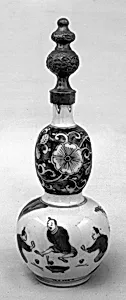
Medium
Porcelain painted in underglaze blue
Dimensions
H. 8 1/2 in. (21.6 cm); Diam. 3 in. (7.6 cm); Diam. of foot 1 7/8 in. (4.8 cm)
Classification
Ceramics
Culture & Period
China · Qing dynasty (1644–1911), Kangxi period (1662–1722)
Department
Asian Art
Museum
Metropolitan Museum of Art, New York, NY
Credit
Purchase by subscription, 1879
Accession Number
79.2.264a, b
Rights
Public Domain
Tags
Art Historical Context
This delicate porcelain water sprinkler, crafted in China during the Kangxi period (1662–1722) of the Qing dynasty, exemplifies the era's mastery of blue-and-white ceramics. Standing just 8½ inches tall with a slender 3-inch diameter, it features underglaze blue paintings of men amid blooming flowers, a motif evoking harmony between humanity and nature. Produced likely at the imperial kilns of Jingdezhen, such vessels were prized for their translucent white porcelain body, fired at high temperatures to achieve exceptional durability and a luminous glow. The underglaze technique—where cobalt blue pigment is applied beneath a clear glaze before firing—ensured vibrant, unfading colors resistant to wear, making these pieces ideal for both domestic use and export. Water sprinklers like this one were practical tools for gardens, altars, or Buddhist rituals, gently dispersing water for purification or to settle dust, blending utility with artistry. Acquired by subscription in 1879, this artifact highlights the Metropolitan Museum of Art's early commitment to Asian ceramics. It offers a window into Kangxi porcelain's global influence, when Chinese exports captivated European collectors and fueled international trade. A testament to imperial innovation, it invites visitors to appreciate the refined elegance of 18th-century Chinese craftsmanship.