
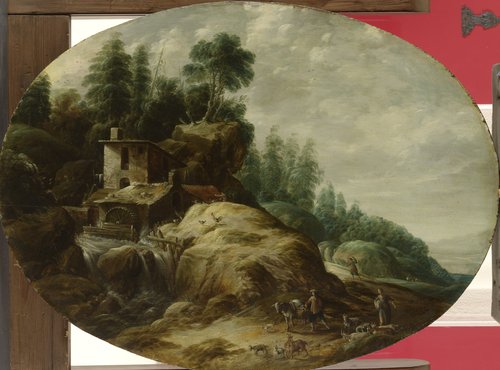
Watermolen bij een beboste heuvel
Medium
oil on panel
Dimensions
57.8; 42.8; 5; 61; 75
Rights
Public Domain
About this artwork
signatuur en datum, linksonder: ‘·Gilis·Peeters ·16·33’
Art Historical Context
Nestled in the Rijksmuseum's collection, *Watermolen bij eenoste heuvel* (mill by a Wooded Hill) a delightful 17th-century landscape Flemish artist Gillis PeetersI). Created in 1633, this oil on panel measures 42.8 x 57.8 cm and bears the artist's distinctive signature and date in the lower left: ‘·Gilis·Peeters ·16·’. The intimate scale invites viewers to linger over its serene depiction of a watermill set against a lush, forested hill, capturing the harmonious interplay of water, stone, and foliage. Painted during the Dutch Golden Age's flourishing interest in natural scenery, Peeters—part of a renowned family of Antwerp artists—excelled in detailed landscapes and architectural views. His work reflects the Flemish tradition of precise, atmospheric renderings influenced by contemporaries like Jan Brueghel the Elder, blending realism with a poetic sense of place. Oil on panel, a favored medium for such cabinet-sized pieces, allowed for rich glazes and fine brushwork, bringing depth to the mill's rushing water and the hill's verdant textures. This signed piece underscores Peeters' rising reputation in the 1630s, offering a window into rural life amid Europe's artistic boom. A gem for landscape enthusiasts, it celebrates nature's quiet drama with enduring charm.