
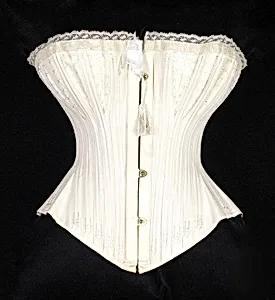
Wedding Corset
Medium
Cotton, metal, bone, silk
Classification
Wedding Corset
Culture
British
Department
Costume Institute
Museum
Metropolitan Museum of Art, New York, NY
Credit
Brooklyn Museum Costume Collection at The Metropolitan Museum of Art, Gift of the Brooklyn Museum, 2009; Gift of Amelia Beard Hollenback, 1966
Accession Number
2009.300.7485a, b
Rights
Public Domain
Art Historical Context
Step into the elegant world of Victorian Britain with the *Wedding Corset* crafted by Thomson, Langdon Co. (also known as W.S. Thomson & Company in 1874. by a renowned London corset maker, this garment exemplifies the era's obsession with the hourglass silhouette, where corsets were essential undergarments that cinched the waist to dramatic proportions—often as small as 18 inches—for both everyday wear and special occasions like weddings. As a bridal piece, it would have provided the structured foundation for the bride's elaborate gown, symbolizing purity, propriety, and the idealized female form. Constructed from cotton, metal, bone, and silk, the corset showcases advanced 19th-century techniques: cotton and silk for the outer shell and lining, metal for sturdy busks or eyelets, and bone (likely whalebone or early steel stays) for rigid support. These materials ensured durability while allowing intricate lacing and shaping, reflecting the blend of functionality and subtle luxury in British costume design. Housed in the Metropolitan Museum of Art's Costume Institute, this artifact from the Brooklyn Museum collection highlights how fashion enforced social norms, influencing posture, health, and gender roles in the Gilded Age. Today, it invites reflection on evolving beauty standards, reminding us of the corset's dual role as both tormentor and triumph of craftsmanship.
About the Artist
Thomson, Langdon & Co.|W.S. Thomson & Company (American|British) · 1865 | –9999 |
American, founded 1865|British