
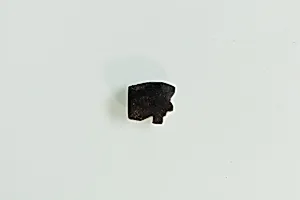
Wedjat eye from string of amulets
Unknown Artist
ca. 1070–945 B.C.
Medium
Hematite
Dimensions
H. 0.7 × W. 0.8 cm (1/4 × 5/16 in.)
Classification
wedjat eye amulet
Period
Third Intermediate Period
Department
Egyptian Art
Museum
Metropolitan Museum of Art, New York, NY
Credit
Rogers Fund, 1925
Accession Number
25.3.169c
Rights
Public Domain
Art Historical Context
Behold the Wedjat eye, a tiny yet potent amulet from ancient Egypt's Third Intermediate Period (. 1070–945 B.C.), specifically Dynasty 21. Carved from hematite—a dense, metallic black stone prized for its and luster—this protective talisman measures just 0.7 cm high and 0.8 cm wide, originally part of a string ofulets likely worn or placed in a burial to safeguard the deceased. Acquired through the Rogers Fund in 1925, it now graces the Egyptian Art galleries at The Metropolitan Museum of Art. The Wedjat, or "Eye of Horus," symbolizes wholeness, protection, and royal power, drawing from the myth where Horus's eye was restored after being torn out in battle. In Dynasty 21, a time of political fragmentation following the New Kingdom's grandeur, such amulets reflected enduring beliefs in the afterlife and divine safeguarding amid instability. Hematite's iron-rich composition may have enhanced its apotropaic (evil-averting) qualities, as Egyptians valued minerals for their perceived magical properties. This exquisite micro-sculpture showcases the finesse of ancient lapidary techniques, where artisans shaped hard stone with precision using abrasives. For visitors, it offers a window into everyday spirituality—proof that even the smallest artifacts carried profound cultural weight in pharaonic Egypt.