
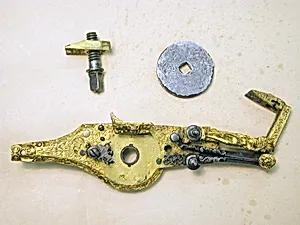
Wheellock Mechanism for a Pistol
Unknown Artist
ca. 1620
Medium
Bronze, steel, gold
Dimensions
L. 6 1/2 in. (16 cm)
Classification
Firearms Parts
Culture
French
Department
Arms and Armor
Museum
Metropolitan Museum of Art, New York, NY
Credit
Purchase, Gift of Russell B. Aitken, by exchange, 2005
Accession Number
2005.37
Rights
Public Domain
Art Historical Context
This exquisite wheellock mechanism crafted in France around 1620, represents a pinnacle of Renaissance-era gunsmithing ingenuity. Measuring just 6½ inches long, this compact bronze, steel, and gold component designed for a pistol, transforming a deadly weapon into a work of art. Wheellocks, invented in the early 16th century, were revolutionary for their self-contained ignition system: a spring-loaded wheel spun against a pyrite striker to create sparks, ign gunpowder without external aids like slow matches. This made them reliable for mounted soldiers and nobles, bridging the gap to later flintlock technology. The mechanism's artistic merit shines in its luxurious materials—polished steel for durability, bronze for structural elegance, and gold accents for opulent decoration—hallmarks of French armorers who elevated firearms into status symbols. Often engraved or inlaid, such pieces blurred the lines between utility and ornamentation, reflecting the era's fusion of military innovation and courtly splendor. On view in the Metropolitan Museum of Art's Arms and Armor Department (acquired in 2005 through a generous gift), this rare survivor invites us to marvel at the unseen craftsmanship behind history's pivotal battles and aristocratic hunts.