
Wheellock Pistol
Unknown Artist
ca. 1590
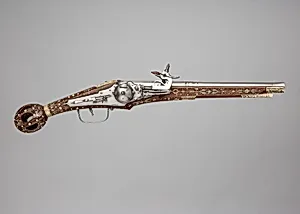
Medium
Steel, wood (cherry), staghorn
Dimensions
L. 25 7/8 in. (65.7 cm); L. of barrel 15 5/8 in. (39.7 cm); Cal. .58 in. (14.7 mm); Wt. 4 lb. 2 oz. (1871.1 g)
Classification
Firearms-Pistols-Wheellock
Culture
German
Department
Arms and Armor
Museum
Metropolitan Museum of Art, New York, NY
Credit
Rogers Fund, 1904
Accession Number
04.3.159
Rights
Public Domain
Art Historical Context
Step into the Arms and Armor gallery at the Metropolitan Museum of Art, where this exquisite wheellock pistol from around 1590 transports visitors to the turbulent world of late Renaissance Europe. Crafted by an unknown German artisan, this firearm measures an imposing 25⅞ inches in length, with a 15⅝-inch steel barrel chambered for a .58-caliber shot. Weighing over four pounds, its sturdy build of steel, cherry wood, and staghorn reflects the era's masterful gunsmithing, blending functionality with fine materials for both battlefield reliability and aesthetic appeal. The wheellock mechanism, a technological marvel of the time, revolutionized handheld firearms by using a spring-loaded, serrated steel wheel to strike a piece of pyrites, igniting gunpowder without the need for a lit match—as required by earlier matchlock designs. Invented in German-speaking regions around the early 16th century, wheellocks were prized by cavalry and nobility for their speed and all-weather performance, though their complexity made them costly status symbols rather than mass-produced weapons. This pistol exemplifies the cultural fusion of artistry and armament in 16th-century Germany, where armorers elevated weapons into sculptural objects. Acquired through the Rogers Fund in 1904, it offers a tangible glimpse into the dawn of modern firepower, highlighting how innovation in arms shaped military history and European power dynamics.