
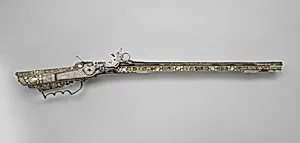
Wheellock Rifle
ca. 1650–60
Medium
Steel, silver, wood (red beech), staghorn, mother of pearl
Dimensions
L. 42 3/4 in. (108.6 cm); Cal. 17/32 in. (13.5 mm); L. of barrel 30 7/8 in. (78.4 cm); L. of trigger 8 1 4/ in. (21 cm); Wt. 7 lb. 11 oz. (3500 g)
Classification
Firearms-Guns-Wheellock
Culture
Silesian, Cieszyn
Department
Arms and Armor
Museum
Metropolitan Museum of Art, New York, NY
Credit
Rogers Fund, 1904
Accession Number
04.3.163
Rights
Public Domain
Art Historical Context
Step into the intricate world of 17th-century arms craftsmanship with this stunning wheellock rifle, crafted around 1650–60 by the skilled Silesian gunsmith Johannes Hartel in Cyn (modern-day Poland-Czech border region). Measuring nearly 43 inches long and weighing over 7 pounds, this firearm exemplifies the blend of lethal engineering and opulent artistry from a time of European conflicts, including the waning years of the Thirty Years' War Housed in the Metropolitan Museum of Art's Arms and Armor department, it entered the collection via the Rogers Fund in 1904. The wheellock mechanism, a hallmark of elite 16th- and 17th-century guns, revolutionized firearms by using a spring-loaded steel wheel striking pyrites to create sparks, igniting the priming powder without an exposed match—making it reliable for horseback or covert use by nobility and officers. Hartel's rifle features a 30 7/8-inch steel barrel with a .53-inch caliber, paired with a sturdy red beech stock, showcasing Silesia's renowned gunsmithing tradition where functionality met prestige. What elevates this piece beyond a weapon is its lavish decoration: silver inlays, staghorn grips, and shimmering mother-of-pearl accents that transform it into a status symbol for the aristocracy. These materials highlight the cultural fusion of martial utility and Renaissance-era ornamentation, inviting us to appreciate how such objects bridged warfare, technology, and fine art.