
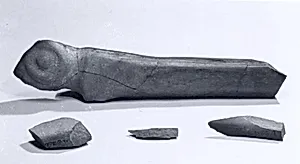
Whetstone
Unknown Artist
ca. 9th century BCE
Medium
Stone
Dimensions
15.12 in. (38.4 cm)
Classification
Stone-Implements
Culture & Period
Iran · Iron Age II, Hasanlu Period IV
Department
Ancient Near Eastern Art
Museum
Metropolitan Museum of Art, New York, NY
Credit
Purchase, Mrs. Constantine Sidamon-Eristoff Gift, 1961
Accession Number
61.100.1
Rights
Public Domain
Art Historical Context
Step into the world of ancient Iran with this unassuming yet essential whetstone, dating to around the 9th century during Iron Age II and the Hasanlu Period IV.ved from durable stone and measuring 15.12 (38.4 cm) long, this practical implement was used to sharpen iron tools, weapons, and blades—a testament to the technological advancements of the time. Discovered in the context of Hasanlu, a key archaeological site in northwestern Iran it reflects the daily life of a warrior society where maintaining sharp edges was vital for survival, agriculture, and conflict. Though created by an unknown artist, the whetstone's significance lies in its functionality rather than ornamentation. Stone implements like this were crafted from fine-grained materials to create a smooth abrasive surface, highlighting the ingenuity of Iron Age craftsmen in the Ancient Near East. Its presence in the Metropolitan Museum of Art's Ancient Near Eastern Art collection, acquired through a generous gift in 1961, offers a tangible link to a period of cultural flourishing and upheaval at Hasanlu, which was dramatically destroyed around this era. This humble object reminds us that art and utility often intertwined in antiquity, preserving the rhythms of ancient labor and innovation for modern eyes.