
明 佚名 全室宗泐題贊 白衣觀音圖 軸|White-Robed Guanyin
late 14th century
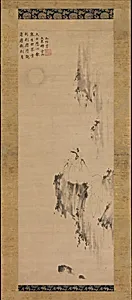
Medium
Hanging scroll; ink on paper
Dimensions
Image: 36 x 12 7/8 in. (91.4 x 32.7 cm) Overall with mounting: 70 x 17 5/8 in. (177.8 x 44.8 cm) Overall with knobs: 70 x 19 1/2 in. (177.8 x 49.5 cm)
Classification
Paintings
Culture & Period
China · Ming dynasty (1368–1644)
Department
Asian Art
Museum
Metropolitan Museum of Art, New York, NY
Credit
Edward Elliott Family Collection, Purchase, The Dillon Fund Gift, 1982
Accession Number
1982.3.3
Rights
Public Domain
Tags
Art Historical Context
This exquisite hanging scroll, titled *White-Robed Guany*, dates to the late 14th century during the early Ming dynasty (1368–1644), a period when Chinese art revived classical traditions after the Mongol Yuan rule. Created by an unidentified artist using ink on paper—a medium prized for its fluidity and expressive potential—the painting measures 36 x 12⅞ inches at its image core. Guanyin, the Bodva of Compassion central to Chinese Buddhism, appears in her serene white-robed form,izing purity, mercy, and boundless benevolence. This depiction reflects Buddhism's enduring popularity in Ming society, where such images served as aids for meditation and devotion in scholarly or monastic settings. The hanging scroll format, with its elegant mounting extending to 70 x 19½ inches including knobs, was ideal for unrolling in intimate spaces, allowing viewers to contemplate the figure's graceful lines and subtle ink washes. A colophon by the monk Quan Shi Zong Lü adds a layer of historical authentication, praising the work and linking it to contemporary Buddhist circles. Acquired through the Edward Elliott Family Collection and now in the Metropolitan Museum of Art's Asian Art department, this piece exemplifies early Ming ink painting's mastery of minimalism, capturing spiritual essence through economy of brushwork. (198 words)
About the Artist
Unidentified ( ) · –