
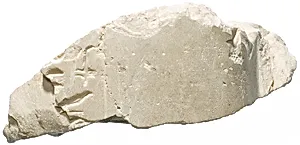
Wig of Nefertiti, inscribed
Unknown Artist
ca. 1353–1336 B.C.
Medium
Indurated limestone
Dimensions
H. 4.5 × W. 10.5 × D. 5.5 cm (1 3/4 × 4 1/8 × 2 3/16 in.)
Classification
Nefertiti head/wig fragment, inscribed
Period
New Kingdom, Amarna Period
Department
Egyptian Art
Museum
Metropolitan Museum of Art, New York, NY
Credit
Gift of Edward S. Harkness, 1921
Accession Number
21.9.513
Rights
Public Domain
Tags
Art Historical Context
This exquisite miniature wig, crafted from indurated limestone and inscribed with Nefertiti's name, dates to the Amarna Period (ca. 1353–1336 B.C.) of Egypt's New Kingdom, Dynasty 18. Likely a votive model or ritual object, it captures the iconic tall, conical hairstyle associated with the legendary queen, wife of Pharaoh Akhenaten. Standing just 4.5 cm high, its small scale belies its royal connection, evoking the revolutionary artistry of Amarna, where elongated forms and naturalism broke from rigid traditions. Carved from hardened limestone—a durable medium prized for its fine grain and ability to hold intricate details—the wig showcases masterful Egyptian stoneworking techniques. The inscriptions personalize it, affirming Nefertiti's divine status amid Akhenaten's monotheistic Aten cult, a brief but transformative era centered in the new capital of Akhetaten (modern Amarna). Housed in the Metropolitan Museum of Art's Egyptian Art department (gift of Edward S. Harkness, 1921), this rare artifact offers a tangible glimpse into royal portraiture and religious life, reminding us of Nefertiti's enduring allure as a symbol of beauty and power.