
William Blake
1808 and 1813
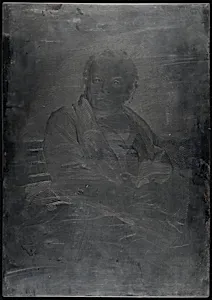
Medium
steel-faced etched copper plate
Classification
Technical Material
Department
CG-E
Museum
National Gallery of Art, Washington, D.C.
Credit
Rosenwald Collection
Accession Number
1943.3.1744
Rights
Public Domain
Art Historical Context
This steel-faced etched copper plate, *William Blake*, was created by engraver Luigi Schiavonetti after a portrait Thomas Phillips. Produced between 1808 and 1813, the plate served as the printing matrix for reproducing the likeness of the renowned poet and artist William Blake. Its presence in the Rosenwald Collection at the National Gallery of Art underscores its value as a technical artifact from the early nineteenth century. The medium itself reveals much about printmaking practices of the period. Etching on copper allowed for delicate lines and tonal effects, while the later steel facing strengthened the surface so it could yield many impressions without wearing down. Such plates were essential tools for circulating images of notable figures before photography became widespread. Visitors can appreciate how this object bridges painting and print, showing the collaborative effort required to preserve and share a portrait across time. It offers a tangible glimpse into the craftsmanship that helped shape Blake’s public image.