
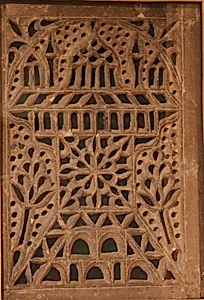
Window
Unknown Artist
18th century
Medium
Gypsum, stained glass
Dimensions
Window without wood frame: H. 22 in. (55.9 cm) W. 15 3/8 in. (39.1 cm) D. 1 1/8 in. (2.9 cm) Window with wood frame: H. 25 3/8 in. (64.5 cm) W. 18 3/4 in. (47.6 cm) D. 1 1/8 in. (2.9 cm)
Classification
Glass
Department
Islamic Art
Museum
Metropolitan Museum of Art, New York, NY
Credit
Gift of William R. Ware, 1893
Accession Number
93.26.8
Rights
Public Domain
Art Historical Context
This exquisite 18th-century window, crafted from gypsum and stained glass, exemplifies the refined artistry of Islamic architectural decoration. Housed in the Metropolitan Museum of Art's of Islamic Art, it about 22 inches high and 15 inches wide its wooden frame (expanding slightly with the frame). Donated in 1893 by William. Ware, the piece showcases the intricate interplay of translucent colored glass set within a delicate gypsum lattice—a technique known as *mashrabiya*-style tracery, though adapted here for light diffusion. In Islamic tradition, such windows transformed interiors by filtering sunlight into kaleidoscopic patterns, symbolizing divine light and spiritual illumination. The gypsum, a versatile plaster-like material, allowed artisans to carve elaborate geometric motifs or arabesques, hallmarks of Islamic design that avoid figurative representation in sacred spaces. This window likely adorned a mosque, palace, or private home in the Ottoman, Persian, or North African realms, where stained glass added vibrant hues without compromising modesty. Its survival offers a glimpse into everyday opulence, highlighting how everyday architecture blended functionality with profound beauty. Visitors can appreciate how these modest dimensions packed monumental visual impact, inviting contemplation of light's ephemeral dance.