
Windsor Armchair
Unknown Artist
1760–90
Medium
Maple, pine
Dimensions
49 9/16 x 39 x 32 in. (125.9 x 99.1 x 81.3 cm)
Classification
Windsor armchair
Culture
American
Department
The American Wing
Museum
Metropolitan Museum of Art, New York, NY
Credit
Gift of Mrs. Screven Lorillard, 1952
Accession Number
52.195.11
Rights
Public Domain
Art Historical Context
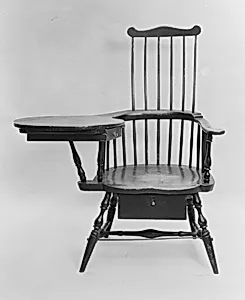
Step into the cozy elegance of colonial America with the *Windsor Armchair*, crafted by an unknown artisan between 1760 and 1790. Standing at an impressive 49 9/16 x 39 x 32 inches, this sturdy piece is made from maple and pine—hardwoods chosen for their durability and workability. Now housed in the Metropolitan Museum of Art's American Wing, it was generously gifted by Mrs. Screven Lorillard in 1952, offering visitors a tangible link to everyday life in early America. Windsor chairs like this one emerged as a hallmark of vernacular furniture design in the American colonies, blending English influences with practical Yankee ingenuity. Typically produced by rural cabinetmakers using lathe-turned spindles for the legs and back, and a wide, contoured pine seat for comfort, they were affordable and ubiquitous in taverns, homes, and meetinghouses. The armchair variant, with its supportive arms, elevated the form for more formal seating, reflecting rising middle-class aspirations during the Revolutionary era. This chair's cultural significance lies in its democratic appeal—mass-produced yet beautifully handcrafted, it democratized comfort and style. As a survivor from a pre-industrial age, it whispers stories of craftsmanship and community, inviting you to imagine a fireside chat in 18th-century New England.