
Wine bottle
Unknown Artist
1800
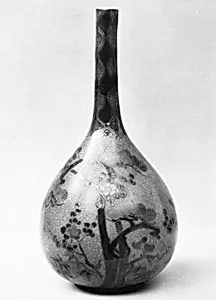
Medium
Pottery decorated in colored enamels (Awata ware)
Dimensions
H. 9 in. (22.9 cm)
Classification
Ceramics
Culture & Period
Japan · Edo period (1615–1868)
Department
Asian Art
Museum
Metropolitan Museum of Art, New York, NY
Credit
Gift of Mrs. V. Everit Macy, 1923
Accession Number
23.225.16
Rights
Public Domain
Art Historical Context
This elegant wine bottle, crafted around 1800 during Japan's Edo period (16151868), exemplifies the artistry of Awata ware, a Kyoto-style pottery renowned for its vibrant colored enamels. Standing at 9 inches tall this ceramic vessel was likely used to serve sake, reflecting the era's thriving urban culture where merchants and samurai alike enjoyed such practical yet beautifully decorated items. The Edo period marked a time of peace and prosperity, fostering innovations in ceramics that blended functionality with aesthetic appeal. Awata ware's signature technique involved applying overglaze enamels—vibrant pigments fired at lower temperatures after the initial glazing—to create enduring, jewel-like colors on the pottery surface. This method allowed artisans to achieve intricate designs without compromising the piece's durability, making it ideal for everyday tableware. Though the artist remains unknown, the bottle's polished form and enamel decoration highlight the anonymous mastery of Kyoto potters, who elevated humble objects into works of art. Housed in the Metropolitan Museum of Art's Asian Art Department as a gift from Mrs. V. Everit Macy in 1923, this wine bottle offers a window into Japan's ceramic heritage, where beauty infused daily life. Visitors can appreciate how such pieces bridged utility and elegance in Edo society.