
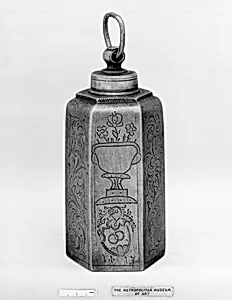
Wine can
Unknown Artist
17th century
Medium
Pewter
Dimensions
6 × 3 in. (15.2 × 7.6 cm)
Classification
Metalwork-Pewter
Culture
German
Department
European Sculpture and Decorative Arts
Museum
Metropolitan Museum of Art, New York, NY
Credit
Rogers Fund, 1906
Accession Number
06.861a, b
Rights
Public Domain
Tags
Art Historical Context
This exquisite 17th-century Germanter wine can, standing just 6 × 3, exemplifies the fine metalwork of the Baroque era in Europe. Crafted from pewter—an affordable yet durable tin-based alloy popular among the middle and upper classes—it served as a practical vessel for serving or storing wine at the table. Its modest size suggests it was designed for personal use or intimate gatherings, blending functionality with subtle elegance. The can's surface features delicate floral motifs and a prominent coat of arms, hallmarks of German decorative arts. Flowers often symbolized abundance and the good life, while the heraldic emblem likely identified a specific family, guild, or patron, underscoring the object's role in displaying social status. Pewterers employed casting and chasing techniques to achieve these intricate designs, making such pieces both heirlooms and status symbols in households across the Holy Roman Empire. Acquired through the Rogers Fund in 1906, this wine can now resides in The Metropolitan Museum of Art's Department of European Sculpture and Decorative Arts. It offers a window into everyday luxury, revealing how ordinary objects carried profound cultural and personal significance in 17th-century Germany.