
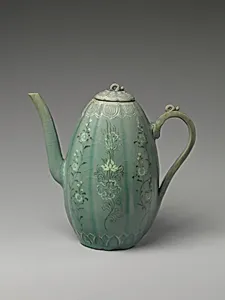
Wine Ewer with Chrysanthemums and Lotus Flowers
Unknown Artist
first half of the 13th century
Medium
Stoneware with inlaid decoration under celadon glaze
Dimensions
H. 9 1/4 in. (23.5 cm); W. 9 7/8 in. (25.1 cm)
Classification
Ceramics
Culture & Period
Korea · Goryeo dynasty (918–1392)
Department
Asian Art
Museum
Metropolitan Museum of Art, New York, NY
Credit
Rogers Fund, 1913
Accession Number
13.195.1a, b
Rights
Public Domain
Art Historical Context
This exquisite wine ewer, crafted in the first half of the 13th century during Korea's Goryeo dynasty918–1392), the pinnacle of Korean cel pottery. Standing at 9¼ inches tall and 9⅞ inches wide, the stoneware vessel features delicate inlaid decoration of chrysanthem and lotus flowers beneath a celadon glaze, which produces a luminous jade-green hue. Produced at royal kilns, Goryeo celadons were prized across Asia for their refined elegance, often exported to China and beyond, symbolizing Korea's mastery in ceramics. The innovative *sanggam* technique—slipping white clay into carved black slip designs before glazing—creates crisp, contrasting motifs that pop against the translucent surface. Chrysanthemums evoke longevity and nobility, while lotuses represent purity and enlightenment, reflecting Buddhist and Confucian ideals prevalent in Goryeo society. As a wine ewer, it served both practical and ceremonial purposes at elite gatherings, blending functionality with artistry. Acquired through the Rogers Fund in 1913, this piece from the Metropolitan Museum of Art's Asian Art collection highlights Goryeo's cultural zenith, a time when pottery rivaled jade in prestige. Visitors can appreciate how such wares embodied harmony between nature, spirituality, and craftsmanship.