
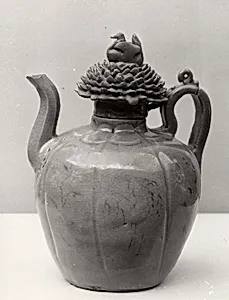
Wine Pot
Unknown Artist
12th–13th century
Medium
Clay
Dimensions
H. 9 in. (22.9 cm)
Classification
Ceramics
Culture & Period
Korea · Goryeo dynasty (918–1392)
Department
Asian Art
Museum
Metropolitan Museum of Art, New York, NY
Credit
Fletcher Fund, 1927
Accession Number
27.119.8a, b
Rights
Public Domain
Tags
Art Historical Context
This elegant wine pot, crafted by an unknown Korean artist during the Gory dynasty (918–139) in the 12th–13th century, stands at 9 inches (22.9 cm) high and is made of clay. Housed in the Metropolitan Museum of Art's Asian Department (Fletcher Fund, 1927), it exemplifies the refined ceramics of this golden age of Korean artistry. Adorned with motifs of ducks—likely incised or molded into the surface—the vessel blends functionality with subtle decoration, evoking the natural world. The Goryeo period marked a pinnacle for Korean pottery, renowned for its technical innovation and aesthetic harmony, often featuring celadon glazes that produced a jade-like luster (though this piece highlights the clay body's form). Wine pots like this were essential in elite banquets and rituals, reflecting Confucian and Buddhist influences on daily life and court culture. Ducks, common in Goryeo designs, symbolized fidelity and prosperity, adding layers of cultural symbolism to everyday objects. As a testament to Goryeo ceramic mastery, this pot showcases the dynasty's emphasis on balance between utility and beauty, inviting us to appreciate the anonymous potter's skill in capturing grace through simple clay.