
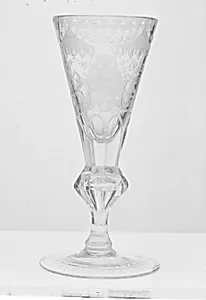
Wineglass
Unknown Artist
ca. 1720–40
Medium
Glass, clear
Dimensions
Height: 7 5/8 in. (19.4 cm)
Classification
Glass
Culture
German or Bohemian
Department
European Sculpture and Decorative Arts
Museum
Metropolitan Museum of Art, New York, NY
Credit
Gift of George D. Pratt, 1926
Accession Number
26.152.2
Rights
Public Domain
Art Historical Context
This elegant wineglass, dating to around 1720–40, hails from the glassmaking heartlands of Germany or Bohemia (modern-day Czech Republic). Crafted from clear glass, it stands at 7 5/8 inches tall, a delicate vessel designed for the refined rituals of 18th-century European dining and socializing. Its pristine transparency speaks to the era's advanced techniques in glass production, where Bohemian and German artisans excelled at creating crystal-clear wares through careful blowing, annealing, and polishing—methods that transformed humble sand and ash into luxurious objects. In the Baroque to early Rococo period, such wineglasses symbolized status and sophistication, often gracing the tables of nobility during lavish banquets. Bohemia's glass industry, fueled by abundant resources and skilled labor, rivaled Venice's fame, exporting these sparkling pieces across Europe. Though the artist remains unknown, the glass's simple yet graceful form highlights the functional beauty of decorative arts, blending utility with subtle artistry. Today, this gift to the Metropolitan Museum of Art from George D. Pratt in 1926 invites us to appreciate the everyday elegance of the past—imagine the flicker of candlelight dancing through its facets as wine is savored. A testament to enduring craftsmanship, it reminds visitors of glass's timeless allure in European culture.